


Shilajit has become one of the most talked-about natural supplements in the world. From fitness enthusiasts to wellness seekers, more and more people are adding it to their daily routines. But here is the problem. As demand grows, so does the number of fake products flooding the market.
Walk into any health store or browse online, and you will find dozens of shilajit products claiming to be “pure,” “Himalayan,” or “100% natural.” The truth is, many of them are not. Some contain harmful fillers, synthetic chemicals, or barely any real shilajit at all.
This is why understanding pure shilajit vs fake products matters so much. If you are spending money on this supplement, you deserve to know exactly what you are getting. This guide will walk you through everything — what real shilajit looks like, how to test it at home, and how to make a smart purchase.
What Is Shilajit?
Shilajit is a natural, tar-like resin that slowly seeps from the cracks of rocks in high-altitude mountain ranges. It is found most commonly in the Himalayas, as well as in parts of Central Asia, Tibet, and the Altai mountains.
It forms over hundreds, sometimes thousands, of years as plant matter, organic material, and microbial compounds compress under layers of rock. This natural process enriches shilajit with essential minerals, fulvic acid and its role in nutrient absorption, and bioactive compounds that contribute to its health benefits.
Because of how rare and time-intensive it is to source, genuine shilajit is naturally valuable. That is exactly why counterfeits are so common.
Why Fake Shilajit Products Are Increasing
The shilajit market has exploded in recent years, driven by growing awareness of its health benefits. More demand always brings more opportunity, including the opportunity for dishonest sellers to cut corners.
Here is why the problem is getting worse:
- Authentic shilajit is limited and expensive to harvest. Fake versions are cheap to produce and easy to sell online.
- The supplement industry is not always tightly regulated, making it easy for low-quality products to reach consumers.
- The supplement industry is not always tightly regulated. You can learn more about how dietary supplement regulations work and why gaps exist that allow low-quality products to reach consumers.
- Some sellers mix shilajit with substances like soil, charcoal, molasses, artificial dyes, or chemical additives to increase volume and reduce costs.
- Labels like “pure,” “Himalayan,” or “organic” are easy to print but hard to verify without testing.
The result? Consumers pay good money for something that either does nothing or, worse, causes harm.
Pure Shilajit vs Fake Products: Key Differences
Before getting into specific tests, it helps to understand the big-picture differences between authentic and fake shilajit.
Pure shilajit is dark brown to black in color, has a sticky tar-like texture, and gives off a strong earthy smell. It tastes bitter and smoky, dissolves fully in warm water turning it reddish-brown, and softens when heated without catching fire.
Fake shilajit, on the other hand, may appear too bright, gray, or artificially black. Its texture is often powdery, waxy, or overly smooth. It may smell like chemicals or have no smell at all. The taste tends to be mild or even sweet, it often clumps or leaves residue in water, and it may melt like plastic or stay completely rigid under heat.
These differences are noticeable once you know what to look for.
What Does Real Shilajit Look Like?
One of the easiest starting points in the real vs fake shilajit check is simply looking at it carefully.
Color
Pure shilajit resin is typically dark brown to jet black in its natural state. When you dissolve a small piece in warm water, it should turn the liquid a reddish-brown or golden-brown shade. If the water turns pitch black or stays completely clear, that is a warning sign.
Texture
Authentic shilajit is sticky and resinous at room temperature. It clings to surfaces and feels like thick tar. It is not dry, powdery, or crumbly. If you warm it slightly between your fingers, it should soften. If you cool it in the fridge, it should harden and become brittle enough to snap.
This temperature-sensitive behavior, soft when warm and hard when cold, is one of the most reliable physical signs of genuine shilajit.
Natural Appearance
Real shilajit often looks slightly uneven or imperfect. It is a natural substance, after all. Be cautious of products that look perfectly uniform, overly shiny, or have a processed appearance. Nature does not make things that symmetrical.
How to Identify Pure Shilajit: 6 Simple Home Tests
These tests do not require any lab equipment. You can do all of them at home with things you already have.
1. Water Dissolve Test
Drop a small pea-sized amount of shilajit into a glass of warm (not boiling) water and stir gently.
Pure shilajit dissolves completely within a few minutes, turning the water reddish-brown or dark amber. No oily film or solid residue remains. Fake shilajit may not dissolve fully, may leave chalky or oily particles behind, or may turn the water an unnatural color.
This is one of the most reliable tests you can do at home.
2. Heat or Burn Test
Place a tiny amount of shilajit on a heat-resistant spoon and hold a lighter flame underneath it.
Pure shilajit bubbles and puffs up when heated. It does not catch fire. It emits a mild, earthy, organic smell. Fake shilajit may catch fire and burn like plastic, melt in an unusual way, or produce a chemical or synthetic smell.
Pure shilajit is composed of organic minerals that do not ignite easily.
3. Smell Test
Take a small amount and hold it close to your nose.
Pure shilajit has a strong, earthy, slightly smoky scent. Some people describe it as smelling like tar, soil, or minerals. It is not a pleasant fragrance, but it is distinctly natural. Fake shilajit may smell like chemicals, artificial fragrance, rubber, or nothing at all.
If it smells like a laboratory instead of a mountain, walk away.
4. Stretch Test
Warm a small piece between your fingers until it softens slightly, then try to stretch it.
Pure shilajit becomes pliable and stretchy when warm. It bends and pulls without snapping or crumbling. Fake shilajit may crumble, feel waxy, or break apart too easily. Synthetic versions often lack this natural elasticity.
5. Freeze Test
Place a small portion of shilajit in the freezer for 10 to 15 minutes.
Pure shilajit hardens significantly and becomes brittle enough to snap cleanly when you press it. Fake shilajit may remain soft, rubbery, or waxy even after cooling.
This test works well when paired with the heat test to observe that temperature-sensitive behavior.
6. Taste Test
Place a very small amount on the tip of your tongue, but only if the product is from a trusted source.
Pure shilajit tastes intensely bitter, smoky, and mineral-heavy. The flavor is unpleasant for most people but unmistakably earthy and natural. Fake shilajit tastes mild, sweet, or flavorless, all signs that it has been cut with other substances or contains minimal real shilajit.
Common Signs of Fake Shilajit
Now that you know what to test for, here is a quick-reference list of red flags to watch out for:
- Sweet or mild taste with no bitterness
- Does not dissolve in warm water
- Burns or melts when exposed to flame
- Overly uniform or machine-shaped appearance
- No strong earthy smell
- Does not change consistency with temperature
- Extremely low price (genuine shilajit is never cheap)
- No lab reports or certificate of analysis from the seller
- Vague or missing source information on the label
Resin vs Powder vs Capsules: Which Form Is Most Trustworthy?
Shilajit is sold in three main forms. Understanding the differences helps you make a smarter choice.
Resin
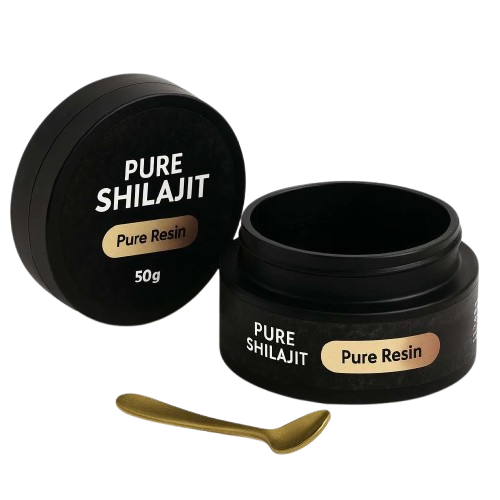
Resin is the most authentic form. It is the least processed, retains the highest concentration of fulvic acid and minerals, and is the easiest to test at home. If you want pure shilajit, resin is your best option.
Powder
Powder can be legitimate, but it is also the easiest form to adulterate. The grinding and drying process can reduce potency, and fillers are easy to hide in powder form. If you buy shilajit powder, the home tests described above are harder to apply.
Capsules
Capsules are the most convenient but the most opaque. You cannot see, smell, or feel what is inside. Unless the brand provides full transparency, third-party lab testing, and clear sourcing information, capsules are the riskiest form when it comes to verifying authenticity.
Tips to Buy Authentic Shilajit
Passing the home tests matters, but smart purchasing habits are your first line of defense.
Ask for lab reports
Reputable sellers always provide a third-party certificate of analysis (COA) that verifies purity, mineral content, and the absence of heavy metals or contaminants. If a seller cannot produce this document, that is a major red flag.
Look for Himalayan sourcing
The finest shilajit comes from high-altitude regions in Ladakh, Uttarakhand, and Himachal Pradesh. Products that clearly state their exact source are more likely to be genuine than those with vague “mountain-sourced” claims.
Choose transparent brands
Good brands explain their harvesting method, purification process, and quality control practices. If the product page has no information beyond marketing copy, be skeptical.
Check the price
Pure, high-quality shilajit is not cheap. If a product is priced drastically lower than others on the market, it is likely diluted or fake. Authentic resin shilajit takes significant effort to harvest, purify, and test safely.
Read real reviews
Look for detailed customer reviews that mention texture, smell, and effects over time, not just generic five-star ratings.
Conclusion
The shilajit market is full of both genuine products and convincing fakes. The good news is that learning how to identify pure shilajit does not require expensive equipment or expert knowledge. A few simple home tests, the water dissolve test, the burn test, the freeze test, and basic sensory checks, go a long way in separating real from fake.
When it comes to pure shilajit vs fake products, the differences are real and significant. Genuine shilajit is sticky, bitter, earthy, temperature-sensitive, and fully soluble in warm water. Fake shilajit is inconsistent, oddly flavored, and does not behave like a natural mineral resin.
Combine your at-home testing with smart buying habits such as lab reports, verified Himalayan sourcing, and reputable brands, and you will be well-equipped to find the real thing every time.
Frequently Asked Questions
1. What is the easiest way to tell if shilajit is pure?
The water dissolve test is the simplest. Drop a small amount into warm water. Pure shilajit dissolves completely and turns the water reddish-brown with no residue.
2. Does real shilajit burn?
No. Authentic shilajit does not catch fire. It bubbles and emits an earthy smell when heated. If your shilajit burns like plastic or synthetic material, it is likely fake or heavily adulterated.
3. What does real shilajit smell like?
Real shilajit has a strong, earthy, tar-like smell. Some describe it as similar to soil, bitumen, or minerals. It is pungent and natural, not chemical or artificial.
4. Is shilajit powder as good as resin?
Generally, no. Resin is the least processed and most potent form of shilajit. Powder is easier to adulterate and may have lower concentrations of active compounds like fulvic acid.
5. Why is genuine shilajit so expensive?
Authentic shilajit is rare. It forms over centuries in remote mountain regions and requires careful hand-harvesting and purification. These factors make it naturally costly to produce.
6. Can I test shilajit purity at home without any tools?
Yes. You can use the water test, the heat test, the freeze test, and the taste and smell tests, all without any special tools or equipment.
7. How do I know if shilajit capsules are real?
Capsules are the hardest form to verify at home. Always look for brands that provide third-party lab reports and clearly state their Himalayan sourcing. When in doubt, switch to resin form for easier testing.
8. Is very dark black shilajit better than brown?
Not necessarily. Pure shilajit ranges from dark brown to black. Artificially black or overly uniform products may have been colored with additives. Color alone is not a reliable indicator, so always test with water and heat.